At Edizione we are committed to forging a sustainable future, not by wishing for it, but by building it today. Our path forward is clear: through our portfolio companies, we invest in the energy transition toward a green economy that drives growth while mitigating the worst effects of global warming on environments and communities worldwide.
Beyond the environmental benefits of transitioning to a cleaner, low-carbon economy, we view the green economy as a significant business opportunity – a key driver of long-term value creation across our portfolio. This is why we focus on transforming energy-intensive infrastructure and services – airports, highways, cell towers, travel retail – into advanced platforms for decarbonization, energy autonomy, and environmental innovation. To achieve these goals, we have committed to aligning with the Paris Agreement and adopting Science-Based Targets initiative (SBTi) targets to reduce emissions from our operations and those of our portfolio companies.
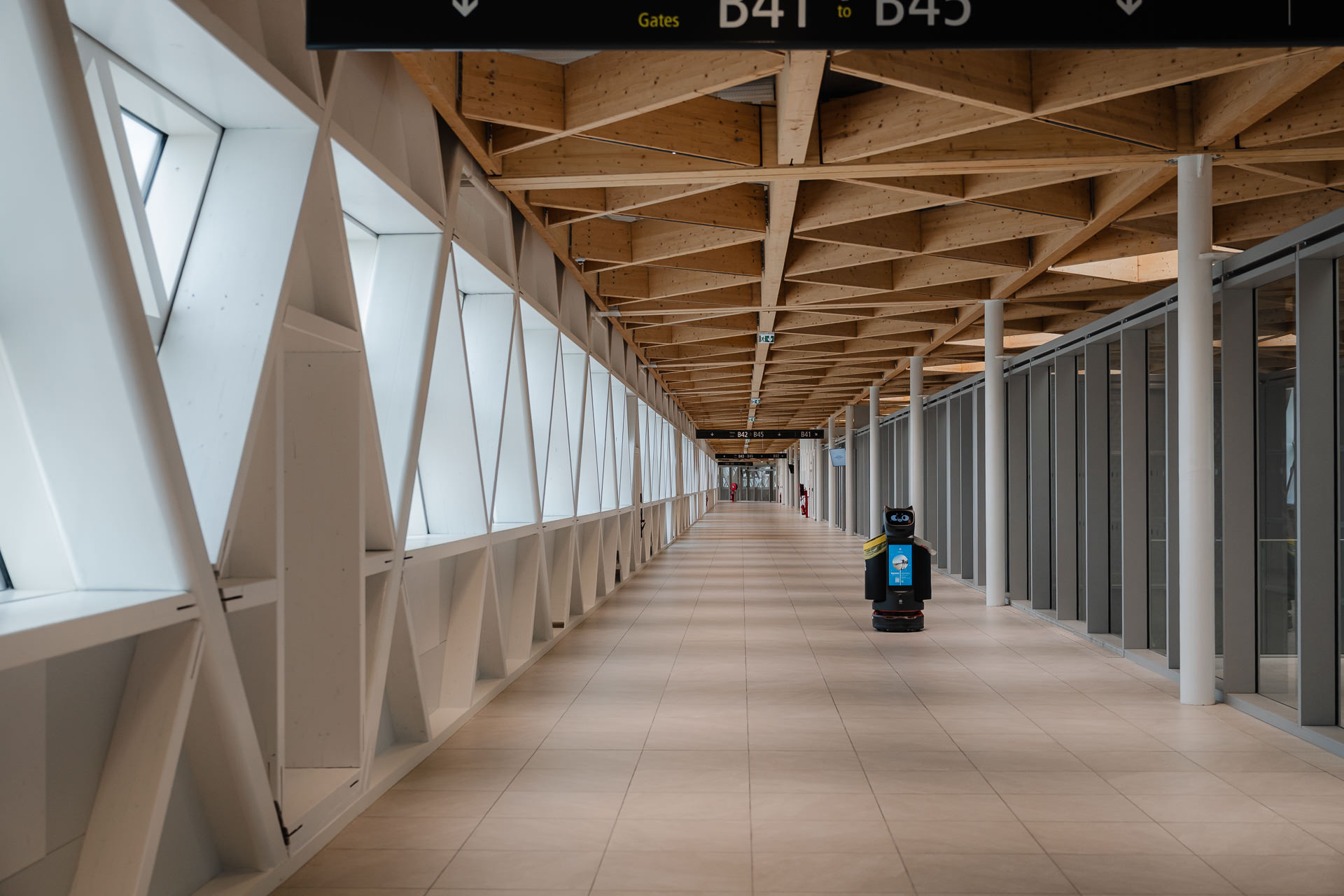
A concrete example of our commitment in this area is Nice Côte d'Azur Airport, controlled by our asset company Mundys. On April 13, the inauguration of the airport’s Terminal 2 extension marked a pivotal moment for travelers to and from the French city. Among other benefits, passengers can now enjoy an improved experience in terms of seating and relaxation spaces as well as reduced bottlenecks at check-in halls, security checkpoints and boarding gates.
Image
But it’s not just about the passenger experience: since 2015, the airport – the third busiest in France, after Paris Charles de Gaulle and Paris Orly – has operated entirely on electricity derived from 100% renewable sources, enabling it to slash its direct and indirect emissions (Scope 1 and 2) by over 90% compared to 2010 levels. This dramatic reduction in emissions was attained through a proactive “Cap 2030” strategy that involves deep structural and technological interventions, including the widespread adoption of electric vehicles and the installation of high-efficiency thermal systems.
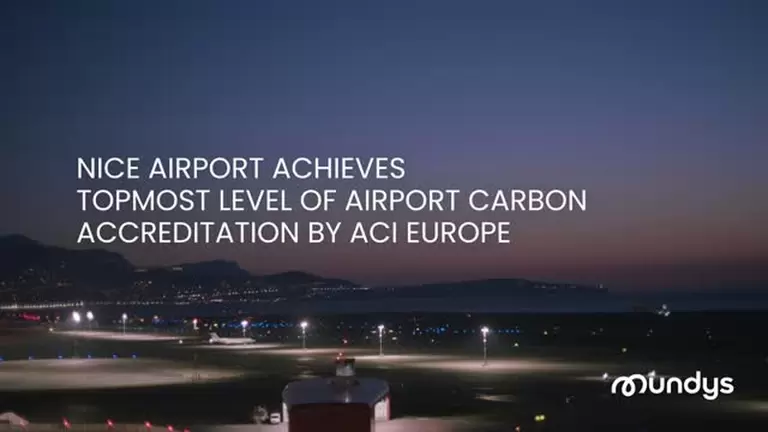
Following these and other emissions-reducing investments, Airports Council International-Europe has awarded Nice Airport “Level 5 Air Carbon Accreditation”. This recognition – the highest level of the de facto global standard for airport carbon management – is shared by only 4% of the world’s airports. With some 15 million passengers per year – a number which the new Terminal 2 extension will allow to reach 18 million – Nice Côte d'Azur Airport is the only major French airport to attain this achievement.
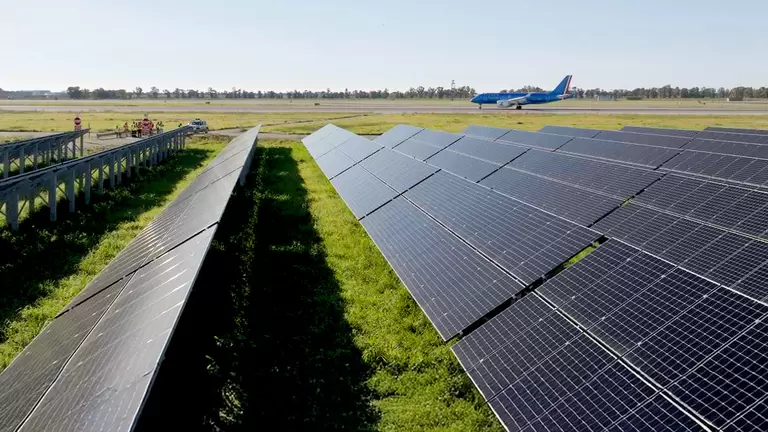
Parallel to ACA’s efforts, Mundys asset company Aeroporti di Roma (ADR) has implemented the Solar Farm to drastically reduce emissions at the Italian capital’s Leonardo da Vinci intercontinental airport. Inaugurated in January 2025, the Solar Farm – the largest self-consumption photovoltaic (PV) plant at a European airport – represents a landmark achievement in airport sustainability. Designed principally for self-consumption – meaning the electricity generated is fed directly into the airport’s grid to power terminals, runways, and support facilities – the plant significantly reduces reliance on the national grid.
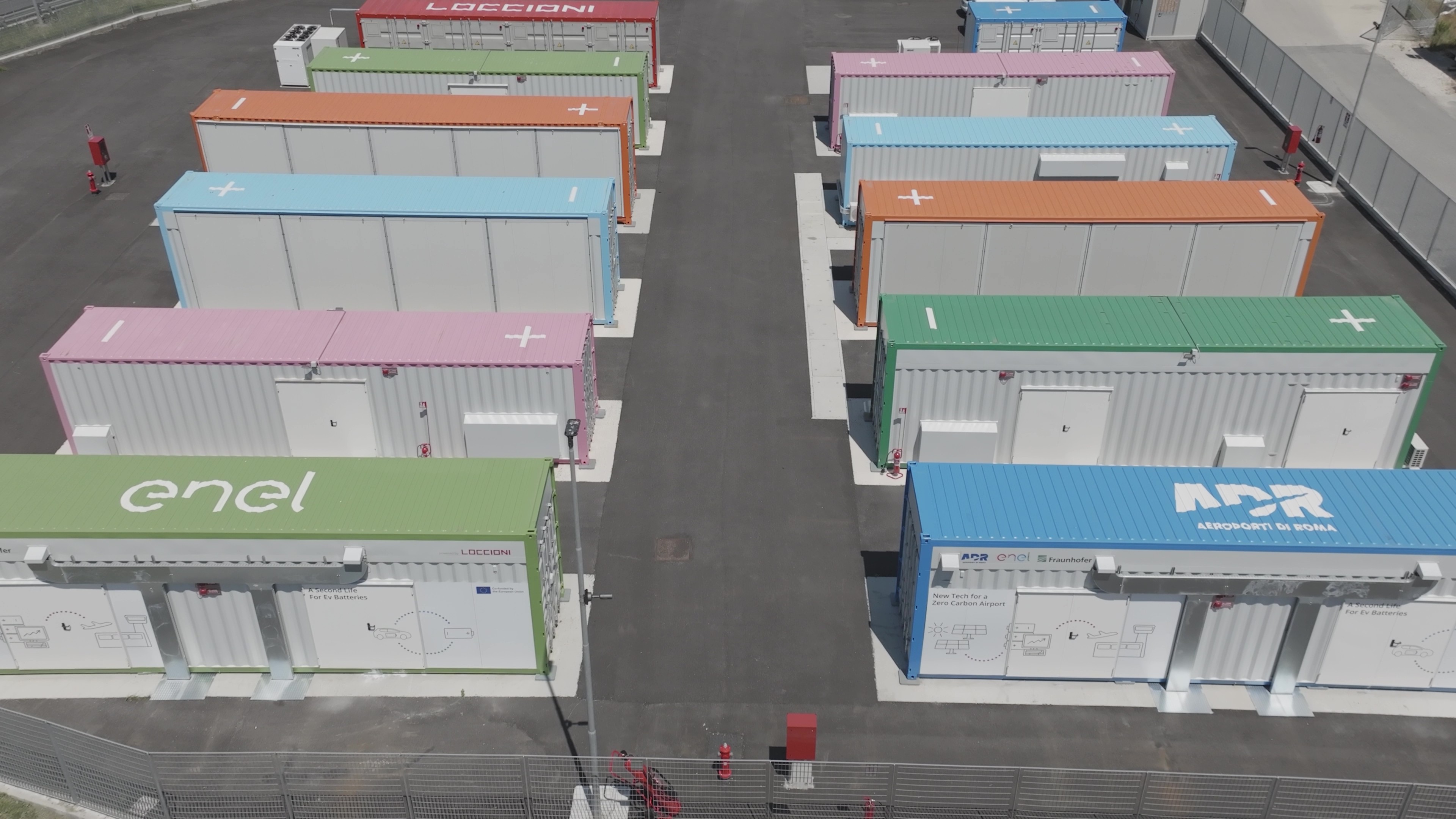
Together with the Solar Farm, the airport also launched its innovative Pioneer project, a battery storage system that stores excess solar energy generated during the day and releases it during evening peak demand, stabilizing the airport’s energy load and ensuring the lights stay on even when the sun is ‘off’. A key innovation of Pioneer is its use of second-life electric vehicle (EV) batteries: instead of using new lithium-ion cells, the system repurposes batteries retired from EVs, extending their lifecycle and adhering to circular economy principles.
Image
The Solar Farm drastically reduces the amount of grid electricity – often fossil-fuel-generated – that the airport needs to purchase, directly impacting the carbon intensity of the terminals’ operations. Meanwhile, by utilizing second-life batteries, Pioneer reduces the carbon footprint associated with manufacturing new battery storage systems, further lowering the overall lifecycle emissions of the infrastructure. These initiatives – crucial to Leonardo da Vinci’s “Level 4 Air Carbon Accreditation” – are core to ADR’s commitment to the Science Based Targets initiative (SBTi) and support the goal of reaching Net Zero for direct emissions (Scope 1 and 2) by 2030 for its assets, which include also Rome Ciampino airport as well.
Together, these projects collectively demonstrate the commitment of ADR and its parent company, Mundys – as well as Edizione – to the airport company’s transformation from a traditional infrastructure operator to a proactive energy manager, using technology and innovation to drive the aviation sector toward a net-zero future.
Another crucial step in ADR’s energy transition is its commitment to tackling Scope 3 emissions. These are the hardest category for airports to address because they are generated by sources airports do not directly own or control, for example passenger transport to and from the terminals, flight operations and the activities of external suppliers. Here, reductions are achieved through influence rather than authority. This is where ADR’s “ÈLEVATE” program comes into play. Launched at a Supplier & Partner Summit in 2024 – and attended by nearly 400 participants – ÈLEVATE helps partners improve their environmental, social, and governance maturity. By fostering collaboration rather than imposing mandates, ADR is creating a ripple effect of sustainability that amplifies the impact of its own decarbonization efforts.
All of these achievements are grounded in the broader philosophy of Edizione, which views infrastructure as a lever for sustainable transformation. As demonstrated, the Group’s approach is characterized by concrete actions and measurable results. The synergy between operational excellence and environmental stewardship is evident in every project: from the use of over 82% recycled materials in highway maintenance to the deployment of advanced traffic management technologies to reduce congestion and pollution; from the massive adoption of LED lighting and electrification of corporate fleets to the installation of over 60 MW of solar capacity across its assets.
Edizione’s infrastructure companies are not only actively reshaping the future of mobility; they are helping bring the energy transition closer to reality – for the benefit of all.